
Skills
What is a skill?
A skill is the ability to do something well. The skills you have learned during your life are known as your “skillset”.
What types of skills are there?
There are many different types of skills, but they can generally be split into transferable (also known as “general” or “soft”) skills and job specific (also known as “hard”) skills.
What are transferable skills?
Transferable skills are skills that are useful in many different areas of life and work. For example, being punctual and reliable are both important skills to have whether we want to be a good family member, a good friend, a good student, or a good employee. Another example could be good communication skills because we all need to communicate with other people in all aspects of life.
Everybody has gained transferable skills from previous experience, even if you can’t think of any straight away.
Other examples of transferable skills are:
Teamwork
Time management
Problem-solving
Listening
IT skills
Managing a household
Caring (e.g. for family members)
What are job specific skills?
Job-specific skills are skills that enable you to do a certain job very well but that are not needed in other areas of life. For example, a construction worker might be very good at mixing cement.
Other examples of job-specific skills include:
Coding
Cutting hair
Video production
Using online databases
Using a cashier till
What if I don’t have any skills?
It can feel strange to talk about your skills. You may even feel like you don’t have any skills to offer a potential employer. However, everybody has something to offer.
For example, by moving to and resettling in a new country, you have shown flexibility, determination, and resilience – all of which are very useful skills. If you have children, you will have used skills like time management, communication and, of course, childcare. It is very likely that you have many other skills, which will come clear after your Employment Adviser has helped you do a skills audit.
What is a skill audit?
In a skills audit, your Employment Adviser will help you explore and record your existing skills, qualifications, and experience. This will usually be carried out in your first meeting.
Why is a skills audit useful?
A skills audit will give you a detailed record of your past, which can help you develop your career action plan. Your Employment Adviser can also help get your qualifications recognised in the UK by sending the relevant documents to UK ENIC, an organisation that compares foreign qualifications with UK ones. Your skills audit can also help with your CV and can make it easier to decide which jobs you might want to apply for now or in the future.
How should I talk about my skills?
A useful way to talk about your skills is the STAR method. This is a way of telling a short story for each individual skill to demonstrate that you have successfully done it before. You can use the STAR method in job applications, cover letters, and at interviews, so it is well worth learning.
A skills audit will give you a detailed record of your past, which can help you develop your career action plan. Your Employment Adviser can also help get your qualifications recognised in the UK by sending the relevant documents to UK ENIC, an organisation that compares foreign qualifications with UK ones. Your skills audit can also help with your CV and can make it easier to decide which jobs you might want to apply for now or in the future.
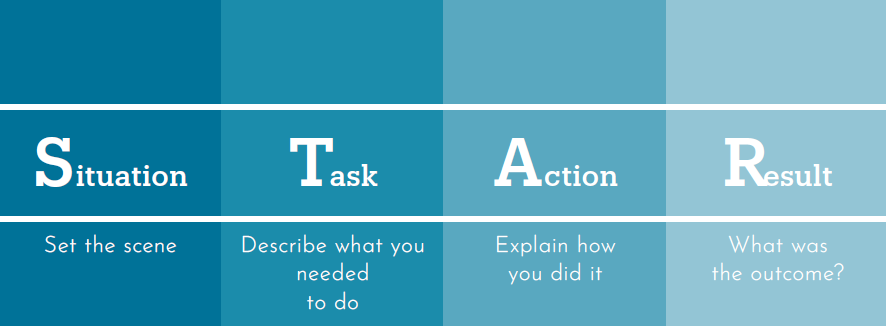
STAR stands for:
Situation - Provide the context. Where were you? What were you doing?
Task - Outline the relevant task. What exactly did you have to do?
Action - Talk about how you approached the task. How did you make sure you did it well?
Result - What was the result of your action? How did you know you were successful?
Whenever you are asked to talk about your skills, remember to use this structure. For instance, if you are asked to give an example of a time you demonstrated good customer service skills, you could say:
Situation: When I was working as a Customer Service Assistant at a local shop in Syria, a customer bought a top from the shop which had a small rip in the sleeve.
Task: I asked the customer whether she would like a new item or if she would be happy for me to repair the original item. She said that it would be fine for me to repair the sleeve.
Action: I took the item of clothing from her and asked her to come back in half an hour. I then used
the sewing machine to fix the rip in the sleeve.
Result: When the customer came back to collect her top, she was very happy with the repaired sleeve. She thanked me for solving the problem and said she would come back the next week to buy more clothes.
As this example shows, the STAR technique gives a full picture and allows you to discuss your customer service experience in an easy way.
Glossary
flexibility
punctual
qualification
reliable
resilience
skills audit
STAR method
technique
Word
Additional Resources
communication
detailed
skill
transferable
Meaning
Passing information from one person to another
determination
Something with lots of information
Showing a strong desire to do something
Being able to change or do different things
Being on time
Formal recognition of a type of experience or skill
Doing what you say you will do
Being able to recover from a difficult situation
The ability to do something well
A way of measuring and recording skills
A technique to talk about your skills
A way to do something
Something that can be used in different situations